General News
12 July, 2025
Council responds to new REZ impact on its community
THE Horsham Rural City Council acknowledged the release of the Victorian Transmission Plan and prepared a response to be forwarded to VicGrid, at the June ordinary meeting of council.
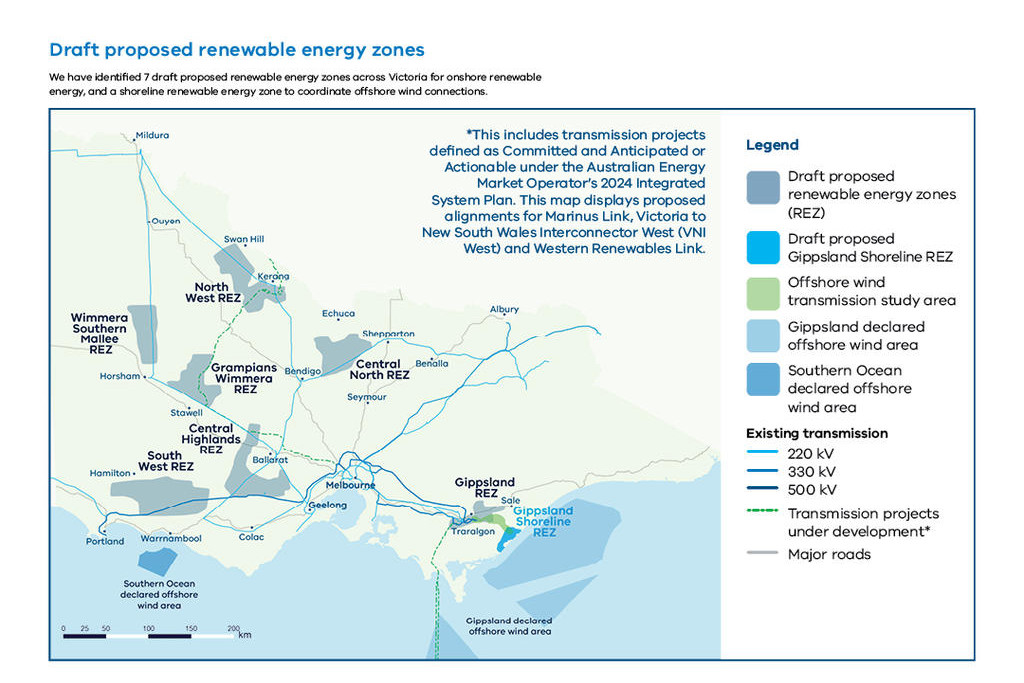
The draft plan shows that some areas of the municipality of Horsham would be impacted by the project.
HRCC spokesperson said it was becoming increasingly typical of Ministerial land use and development decision-making processes to marginalise communities' input and build in exemptions that remove rights to appeal decisions.
"Council's submission highlights that it is often councils who are required to manage the on-ground impacts of ministerial approvals," they said.
"This necessitates genuine input and resourcing to be a key part of supporting the implementation of the plan to avoid unseen local impacts.
"Maintaining cohesion within our impacted communities should be prioritised when there is potential for proposals to be divisive."
Councillors discussed the best way to lessen the impact on agricultural land and ensure adequate compensation.
The release of the latest plan in May showed the seven Renewable Energy Zones across Victoria that VicGrid considers the most suitable areas to host renewable energy: wind, solar, and battery storage.
It also identified the seven priority transmission programs and the investment required to complete the projects.
This announcement identified that the Wimmera Southern Mallee REZ zone includes land inside the HRCC boundaries.
The Grampians Wimmera REZ is located just beyond the council's eastern boundary in the Northern Grampians and Yarriambiack municipalities.
The key transmission grid project affecting Horsham and the region is the North West Strengthening Program.
It will include the replacement of single-circuit transmission lines with new high-capacity double-circuit lines, subject to future approvals.
While HRCC documentation showed it acknowledged the reasons and value of the VTP and the designation of the REZ, where future renewable energy projects would be located and infrastructure needed, the council stated it was less clear how aspects of it had been prepared, including the consideration of agricultural land quality and productivity.
Also missing was a clear outline of how future approval pathways for new projects and community funding might work, the council said.
Given the stand by hundreds of landholders in other parts of Western Victoria against transmission lines crossing agricultural land, the council has also highlighted social cohesion, transparency, genuine engagement with communities, and equitable resources for councils to participate.
On this basis, HRCC identified three clear key issues in their response to VTP that they want addressed.
Agriculture productivity
Approvals, engagement, social cohesion, and conflict resolution
Economic development
Council firstly acknowledged the preparation of the VTP and endorsed it but with the inclusion of the need for ensuring appropriate management and compensation for landholders who experience damage to crops during the works stage; equitable compensation for landholders impacted by transmission line upgrades; and the investigation of old stock routes across the municipalities for the location of transmission lines.
Cr Bec Sluggett suggested an investigation into the former stock routes across the Wimmera to see if they could be used to transport the transmission lines instead of crossing agricultural land.
The motion was moved by Cr Bec Sluggett and seconded by Cr Cam McDonald.
Councils are not part of the approval process for any future renewable projects; these are made by the State Government.
In other parts of the state, landowners along the VNI West transmission line have allied to lock their gates against the development there, resulting in legislation by the state government to fine them $12,000 if they don't allow access and an additional $4000 if they don't identify themselves.
Further fines can be applied if they display signs on their properties against the project.
TCV workers can now legally access land without the owner's permission and can be accompanied by Victorian Police to assist them.
As the growing line of landowners continues to lock their gates, this project has been delayed a further two years to 2030.
The delivery company for the project cited that extended environmental, geotechnical, and cultural assessments, landholder engagement, and access/easement arrangements were reasons for the extended timeline.
Read More: Horsham