General News
19 April, 2025
VETERANS' VOICES: Geoffrey Leonard Wiblin
Geoffery Leonard Wiblin was born at Natimuk on February 5 1923.
He was the son of Leonard and Helene May Wiblin of Port Fairy.
Geoffrey was educated at Casterton in 1924–36 and attended HES at Port Fairy in 1936–39.
At Melbourne University, he obtained his intermediate and leaving certificates.
Geoffrey also attended Australian Coaching College in 1940.
Before enlising he worked as a clerk.
Geoffrey served in the Militia Forces between joining on May 29 1939 and September 24 1940.
He served in 23/21 Battalion and 32 Battalion infantry signallers.
His service number was VE 445862.
He then transferred to Class A Reserve, enlisting at Footscray.
His reserve forces service number was V68064.
Geoffrey was promoted to corporal in 32 Battalion on June 6 1941.
He was marched out to Balcombe on July 30 of that year.
He entrained to 5 Military District on March 18 1942 and was marched into General Details Depot, Wayville, South Australia, from 31 Battalion, SAL of C Area.
Geoffrey was released to Area 21B to enlist in the RAAF on July 21 1942.
His service number was 419411.
He served as an aircraftman (LAC) with 2 Air Crew V from August 4 1942, then as an aircraftman with 2 Air Crew V – Observer (O) from November 9 1942 at Initial Training School (IITS).
He served as LAC with Air Crew 2 (O) on November 7 1942 at Mount Gambier, SA.
He completed a No 31 Navigator course at 2 Bags on February 5 1943 and a Navigation (B) course as a temporary sergeant from April 29 1943.
Geoffrey completed a 1 GR N course at General Reconnaissance School (GRS) Barnsdale on May 14 1943.
He also undertook 13 Beauford Operational Training (O/T) on August 3 1943 and a 13 Beaufort Torpedo course on October 18 1943.
last rank was flight sergeant.
His unit was No 100 Squadron, RAAF.
Geoffrey was killed with the crew of his Beaufort aircraft A9-480 in an accident on March 5 1944, aged 21.
The incident occurred at Bolla Bolla, Goodenough Island, in the D’Entrecasteaux Islands, Papua New Guinea.
The Beaufort aircraft A9-480 crashed after take-off at Vivigani Airfield.
There were no survivors.
Those on board were camerman Corporal Bernard Leo Duggan (63239) (No 71 Wing) (supernumerary), pilot Flying Officer Frederick William Spencer Easton (429240), wireless air gunner Flight Sergeant James Sharpe Hamersley (415140), wireless air gunner Flying Officer Alexander Peter Potts (402094) and Geoffrey as the navigator bomb aimer.
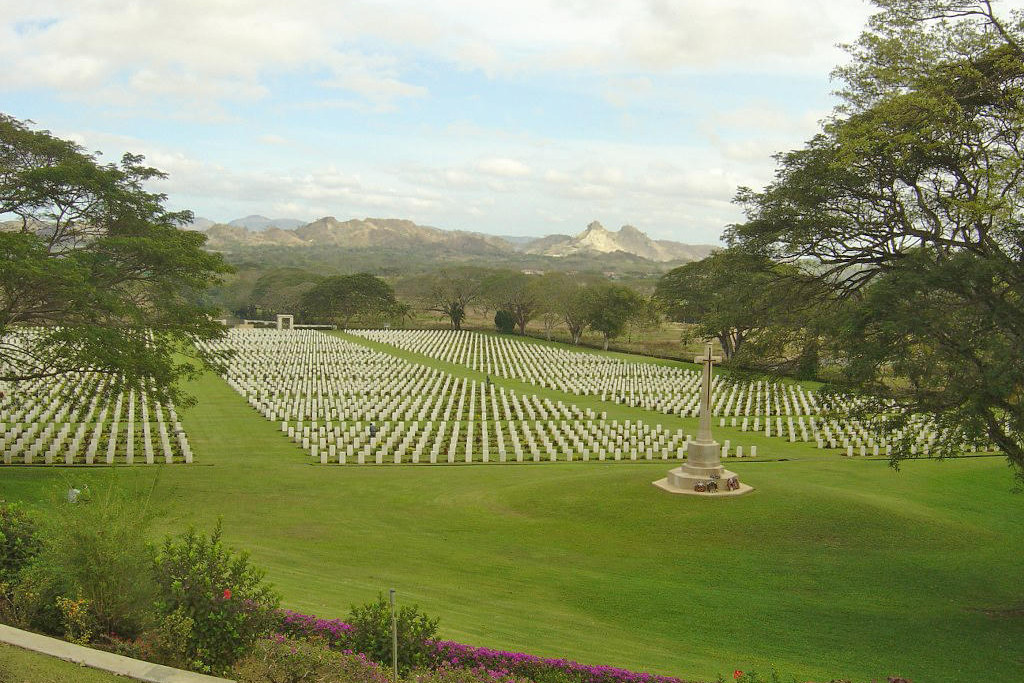
Geoffrey is buried in Bomana War Cemetery (A3 E 11), Port Moresby.
Before his death, Geoffrey Leonard Wiblin had flown six operational sorties, totalling 21.45 operational hours and 33.25 other hours.
Geoffrey Leonard Wiblin is commemorated on panel 105 in the Commemorative Area at the Australian War Memorial on Canberra.
He is remembered in the Cenotaph Undercroft of the State War Memorial, Kings Park, Perth; at Port Fairy M2; and on the Port Fairy War Memorial.
Geoffrey’s death notices appeared on page 2 of the Argus Newspaper in Melbourne.
They read:
WIBLIN. – In loving memory of Flight Sgt Geoffrey Leonard, killed air operations, New Guinea, March 5 1944. Dearly loved son of Helene and Leonard, loved brother of Joy, Bill, Ken (RAAF deceased) and Keith. Sadly missed.
WIBLIN. - In loving memory of dear Geoff (RAAF). Killed air operations March 5 1944. Sadly missed. Gwen.
[CROSSHEAD] Bomana Cemetery
After the Japanese landed at Lae and Salamaua in March 1942, Port Moresby became their chief objective.
They attacked by sea with an amphibious expedition that set out early in the month but were intercepted and heavily defeated by American naval forces in the Coral Sea, and what remained of the Japanese expedition returned to Rabaul.
The Japanese then advanced on Port Moresby overland and the attack was launched from Buna and Gona in September 1942.
Early in 1942, with little resistance the Japanese established a considerable force and developed a useful base on Bougainville, the largest and most northerly of the Solomon Islands.
They held this until Americans and Australians began offensive operations towards the end of 1943, at which time Bougainville was still in Japanese hands.
By August 1945 when the Japanese surrendered, most of the island had been recovered.
In Port Moresby (Bomana) War Cemetery there are 3824 Commonwealth burials (699 of which are identified) of servicemen who died fighting in Papua and Bougainville.
The Port Moresby Memorial stands behind the cemetery honouring 750 men of the Australian Army (including Papua and New Guinea local forces), merchant navy and RAAF who lost their lives in the operations in Papua and have no known graves.
The naval personnel are commemorated on the Plymouth Naval Memorial, England, and the Bougainville casualties are commemorated on a memorial at Suva, Fiji.
With thanks: Sally Bertram, RSL Military History Library. Contact Sally at sj.bertram@hotmail.com or call 0409 351 940.


