General News
11 June, 2025
Look out for Malleefowl
Hindmarsh Shire Council has issued a warning for the increase in Malleefowl seen on the roads as they seek food after the devastating bushfire in the Little Desert National Park earlier this year.
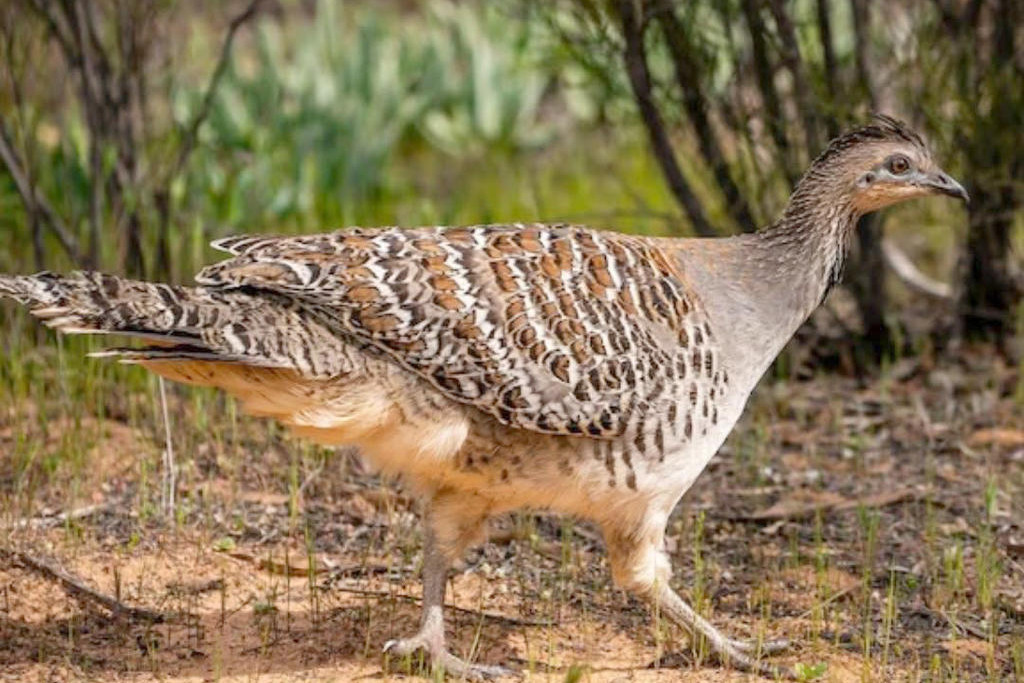
Up to five Malleefowl have recently been seen on Kiata South Road, next to Keith Hateley nature walk section of the Little Desert National Park.
Council believes the birds are seeking refuge in one of the unburnt sections of the park and may be feeding on split grain on the roadside.
National Malleefowl Recovery Group chairperson and scientific advisor Dr Joe Benshemesh said the Malleefowl's that survived the fire are unlikely to penetrate more than 100 metres into the burnt area due to the lack of cover.
"The dry conditions since the fire mean that not much is likely to be growing in the burn and there would be little to feed on," he said.
"It is likely to take many years before malleefowl penetrate far into the burn area and 15 years or so before they breed there."
Council has put up temporary speed reduction signs and have warned motorists to be on the lookout for Malleefowl and other native animals along the section of the road.
"Malleefowl have no road sense and may well move onto the road as you pass," Dr Benshemesh said.
"They are currently attracted to the roadside because they are hungry and road deaths have already been reported near the Keith Hateley nature walk section of the Little Desert National Park.
"This stretch of road is only a few kilometers and slowing down won’t cost much time but could save a malleefowl."
Now a critically endangered bird, Malleefowl is part of the Megapode family and is one of the three mound-building bird species in Australia.
They have a short bill, heavily built feet, and their head and neck are predominately grey with a dominant dark stripe that extends from their throat to the upper breast.
The species can weigh up to 2.5kg and reach about 60cm in length.