General News
9 June, 2025
Paying tribute to the hard workers
Mick Giddings has dedicated a big part of his life to the Mallee's rich history.
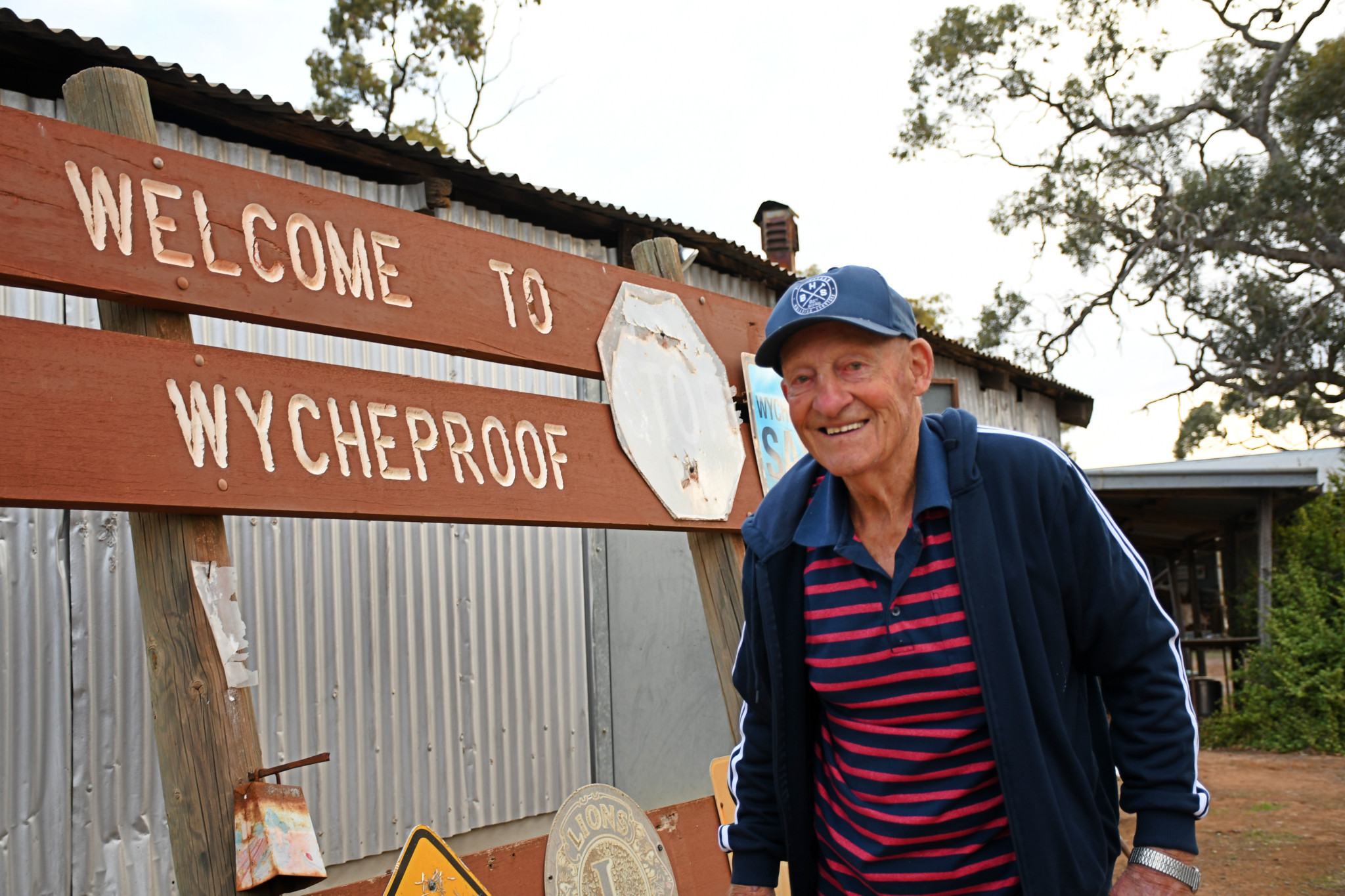
Mick Giddings has dedicated a big part of his life to the Mallee's rich history.
His devotion to preserving and promoting the ways of generations before him was realised this week with a Medal of the Order of Australia for services to the community of Wycheproof.
Although he openly admits the King's Birthday honours initially struck a raw nerve.
"I was a bit embarrassed because everyone volunteers here," he said proudly.
"It's always been a volunteer town. If you wanted anything done, people volunteered."
However, he admits the distinction is an honour.
"I'm pretty happy to get up because there are a lot of other people who deserve it as much as I do," he said.
"I think my kids have been pushing a bit, and I'm lucky that I have good kids.
"I've got a good family and good grandkids."
Like any good farmer, Mick is pragmatic, not wasting time on meaningless tasks such as talking about himself.
"I'm one of those guys that likes doing stuff," he said,
"I enjoy working and volunteering.
"History is happening every day. That's what I love about it because every day is good. I'm never bored."
Fortunately, Mick is surrounded by history.
One-stop shop of the Mallee's history
As the owner and curator of Willandra Farm Museum, he has an extensive collection of farming-related memorabilia.
Established in 1991, the museum occupies a considerable part of the family's property, featuring an old homestead, a school building, numerous sheds, a mobile jail, and an outhouse hosting a myriad of agricultural equipment that helped shape the Mallee.
"I'm proud of these people who started with nothing and built everything from the ground up," he said.
"I woke up one day and thought, you've got to recognise these pioneers."
"So I started collecting local stuff."
Scattered across the room are well-preserved shovels, axes and saws, with traces of defunct businesses, former shires, and well-known local family names.
"Everything's got a handle; they had to do everything with that stuff physically," he said.
"There's no easy way out.
"They were marvellous with what they accomplished in their time."
The museum lives on his grandfather's land, which he bought after walking from Borung to Wycheproof as a young man.
It displays his grandfather's old workshop, complete with a blacksmith's forge, as well as a slab hut with a stringybark roof that houses a static display of home life from the 1870s.
"This was a farming setup: men working here with horses, cows, pigs, sheep, everything going," Mick said.
From cards to combines
"I got the bug walking home from school. I picked up empty cigarette cards.
"Back then, everyone was smoking, the cigarette cards were American, all English, all these sorts of things. People would throw them on the footpath, so I ended up picking them up.
"Then, if you ate Wheaties, you'd get a couple of cards... then you'd want another box. It was a continuous loop."
As he grew older, Mick shifted his focus from collecting cards to farm equipment.
"Even during the droughts, people always kept their stuff," he remarked.
"They didn't throw anything away, kept the stuff down the backyard.
"Most of it was obsolete, but they left it there in case they needed it one day."
Through clearance sales and generous donations, Mick's collection has grown to the point that each section can focus on the broad changes experienced by farmers in the 19th and 20th centuries.
However, the theme of honest, hard-working people trying to make a living in an unforgiving world remains consistent.
"The farmers did not have much equipment when they arrived here," she said.
"They had a single plough for an 83-acre paddock. But they got smarter, added a second blade, and now they're ploughing the same field in half the time.
"It's good for kids to know how things happened in those days."
Education continues after lessons end
Giddings' name is etched in the history books housed within the museum.
A celebrated star in the North Central Football League, he won three Best and Fairest medals for Narraport in 1958, 1960, and 1961.
After Narraport and Wycheproof merged in 1964, he won his fourth Feeny Medal in 1966.
He would play in 300 games before coaching the Demons for more than a decade.
Inside an old school building once used by the local school, he proudly displays everything related to his hometown, including a couple of Wycheproof-Narraport jerseys.
"You've got a lot of school photos here. You might not believe it, but we've been flooded out here a couple of times."
Sitting in a frame is a picture of Mick's grandmother in 1923, standing on a felled tree as water gushes across the farm.
"The water came from the front of the property, straight under the house," he said.
"In 2011, we had the same fun and games with another flood."
Adorning the walls are newspaper cuttings of iconic Wycheproof events, each one with a detailed story stored in Mick's steel-trap mind.
Despite retiring from footy decades ago, he still remembers playing for the NCFL and beating the Wimmera league in 1971.
"I'm still keen on footy," he said with a wry smile.
"I'm still trying to play from the boundary line."
Still wanting to make a difference
Despite his old age, Mick is still looking to improve things in Wycheproof.
His desire to improve his hometown is in his blood - as is the drive to collect everyday items.
"My grandmother was heavily involved in the town, especially with the CWA.
"She kept everything too: all the dockets.
"Back then, you had to keep an eye on everything that you were doing."
Complete with his grandfather's thorough diary entries and record keeping; Mick knows every purchase his family made almost a century ago.
While knowing his family connection to Wycheproof is vital, it's helping others find their connection to the town that gives him satisfaction.
"People work and move away, but when they're a bit older and have some time on their hands, you can wonder if anyone remembers," he said.
"So I'll mail them a newspaper clip or a docket from a family business for that family connection.
"I'm enjoying that a lot.
"You can do your little bit."